Long Term Management Against Long Term Investing? – Thoughts on Activism and Short-termism

Corporate governance is complicated, and I usually don’t like to think too much about it because it’s just hard. However, I recently came across two very interesting and insightful articles, one from Harvard Business Review and the other from Atlantic with conclusion against each other on Activism. I hope this thinking process will be beneficial to me, and to my readers, in building up knowledge base and investment philosophy.


First, let’s go through a quick summary of the articles.

HBR, in their 2017 May-June magazine, published a package of articles titled “Managing for the long term” [link here], with a core article of “The Error at the Heart of Corporate Leadership” written by two well-regarded HBS professors Joseph Bower and Lynn Paine. The article started with the Valeant-Allergan acquisition drama involving Bill Ackman (by the way, I agree that Valeant was a questionable company which adopted questionable business practices and didn’t create social value. So I am with Allergan and this article on this point), and followed by challenges on the most widely used agency-based model in context of the corporate governance and proposed a new entity-based model which essentially proposes to gives company more discretion (i.e. power) by loosening them from the agent-principal handcuff. A quick summary chart exempted from the article below.

HBR_EntityModels

This article is thoroughly contemplated and aimed justifiably at the core issue of the capital market – Short-termism, however may have gone too far to directly link Short-termism to Activism. Thus, I have some reservation on some minor points, mainly due to this linkage (which could be a separate write-up, so I won’t elaborate here), but overall think it’s a great step to tackle such a socially important issue and think this new model may have profound impact on future corporate governance.

Continue reading

Thoughts on Echelon Corp. [ELON]

Company Overview and History

Echelon was founded in 1988 by Clifford “Mike” Markkula Jr., who also has served as CEO of Apple in its early days. For years, the company operated in two divisions: Internet of Thing (IoT) and Grid. Both sides suffered operational difficulties and wasn’t able to turn to profit. New CEO Ron Sege was brought in October 2010 to try to turn the ship. In August 2014, Echelon agreed to sell the whole grid business to a European company S&T AG. Around the same time, it also made an acquisition of Lumeware, a smart lighting startup. It was essentially an asset swap, so that the new company can get rid of non-core business and focus on smart lighting – the area management thinks has the most potential.

The troubled operation was reflected by the stock price as it lost almost 95% value since 2007. Also noted, that the firm had a 10 for 1 reverse split in December 2015, so you are basically looking at a penny stock to some extent ($0.6 if adjusted for the reverse split).

ELON_1

After the changes, the business operates in two segments: 1) embedded systems and 2) smart lighting. Embedded systems include the legacy IoT division’s products which are the networking products (chips, routers, gateways & software etc.) for Industrial IoT devices (smart meters, refrigerators, etc.), however this side of business kept deteriorating on a continued basis. Smart lighting, on the other hand, consist the acquired Lumeware products plus the existing lighting control IoT products (wired & wireless controllers, gateways, servers & software etc.) In the most recent investor presentation, management indicated the lighting business has seen 4 straight quarters increase (however, without further details). Clearly, the management has identified the lighting business as the future of company and allocated resources accordingly to pursue this opportunity (e.g. hiring lighting controlling sales veteran Rick Schuett on April 2016)

Basically, it is an unloved business by Wall Street as the legacy businesses are doomed and the turnaround seems to take much longer than expected, if not impossible. When a stock looks like a road kill, it may be a great opportunity for investor who can see through what appears at the surface. Next thing is to examine whether the price is attractive enough to make this crappy business (suppose it is for now) an attractive investment.

Continue reading

Indirect Hard Lesson – Baker Street Capital

The more hard lessons you can learn vicariously rather than through your own hard experience, the better.

– Charlie Munger

I recently came across this Forbes article [The 34-Year-Old Hedge Fund Manager Who Bet Everything On A Stock That Tanked] discussing about a doomed hedge fund due to heavy concentrated bets. In short, the fund invested over 85% of AUM in a single name, Walter Investment Management [WAC], and the stock suffered a 95% slump since its investment in 2015. Per this fund’s SEC 13F filing, WAC seems to be the only US long position it holds currently. Given the significant size and the drastic drop of stock price, regardless other non-US longs or other shorts, the WAC position will possibly wipe the whole fund out.

Out of curiosity, I further researched Baker Street and its founder Vadim Perelman. It appears that Perelman is a strict value investor, following legendary investors like Warren Buffett, Howard Marks & Seth Klarman’s doctrines closely. Before the WAC position, Baker Street had also played a concentrated bet on Sears Holdings (SHLD). More detailed info can be found on this Barron’s article.

Some resources and interesting reads:

Based on these writings, Perelman certainly appears as a talented and diligent investor (also with sense of humor for the sake of the Berkshire joke). However Buffett would hardly approve his approach as intelligent investing (remember the oracle of Omaha’s 2 rules: Rule No. 1 is never lose money. Rule No. 2 is never forget Rule No. 1.) This drives me to think what went wrong to lead a talented value minded investor to such a flunk.

Trying to put myself in Perelman’s shoes, here are my further thoughts and some lessons I learned from this case study:

Continue reading

Texwinca (0321.HK) – a Cigar Butt or Anything More?

Disclosure: I do not hold position in mentioned stock. Also, the price has increased slightly since I initially wrote it up (from HK$5.11 to HK$5.30), however all points in this write up are still valid with a price level of HK$5.30.

Company Overview and Recent History

Texwinca is a Hong Kong-listed textile & apparel company, with two main business segments: 1) Textile business, which produces, dyes & sells knitted fabric and yarn, & 2) Retail and distribution business, which sells casual apparel and accessories. Each segment contributes about the half of the revenue to the firm. The vertically integrated cost-efficient model used to work well, however both segments have been hit hard by some adversity recently.

Texwinca’s textile business is one of the largest fabric producers in the world, serving many global fashion brands like A&F, Ralph Loren and Gap. However, it is facing cyclical headwind driven by the soft global (especially US, which is the main textile revenue source) economy and the increasing production cost in mainland China.

The retail business sells its apparel majorly through brand Baleno. However, Baleno (along with many other local mainstreet fashion brands like Esprit, Giordano & Meters/bonwe) has been squeezed very hard in its mainland China market (its main retail revenue source) by new-entering international fast fashion brands like Zara, H&M and Uniqlo. Baleno, once a high end fashion brand, lost its value significantly in the past few years, and is now considered merely as an “immigration worker (lowest income city worker from rural area) brand”. To cope with the competition, the business tried to streamline by disposing all the non-core brands and focus solely on Baleno.

Driven by weak performance on both sides, the stock has lost more than 40% of its value since the recent peak at HKD 9.38 in July 2015. At the current stock price (5.11), the stock looks attractive from first glance with following traits:

Continue reading

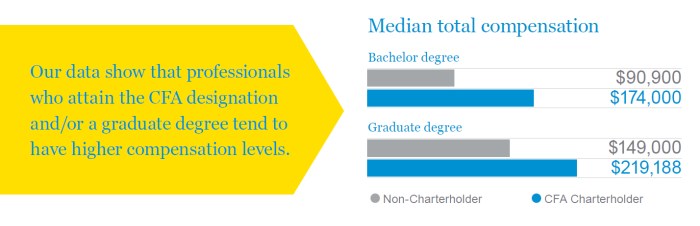
How much do finance people make in Chicago? – 2016 CFA Compensation Survey

Following the 2015 comp survey (find 2015’s number in this old post), CFA Chicago Society recently published 2016 version. This is the second year of this informative survey. PDF report can be downloaded from the link at the bottom.

CFAChicagoComp_2016

Download link: compensation_survey_2016


CDEV Stock/Warrant Arbitrage Play

Centennial Resource Development [Nasdaq:CDEV] is a Delaware Basin pure-play oil producer. It was formed through the Silver Run Acquisition Corp (a special purpose acquisition company) acquiring Centennial Resource Production (a distressed independent oil producer) in October 2016.

As a sweetener of the Silver Run IPO, each IPO share include a share of the straight stock and some warrants with strike price of $11.5 and expiring at 2/23/2021. On 2/27/2017, CDEV released an announcement of its intention to deliver notice of redemption of warrants (link here). Long story short, the warrants carried some condition that, if triggered, will allow the company to redeem (forcing exercise) all the outstanding warrants. The condition is that the stock’s close prices are at least equal or larger than $18 for any 20 trading days within a 30 trading day window, which was met by 2/24/2017. According to the announcement, the company will initiate the redemption starting from 3/1/2017 and the warrant holders will have until 3/31/2017 to exercise their warrants, or the company will redeem it at $0.01/warrant! Obviously, the most important thing for any warrant holders is that don’t forget to exercise or sell your warrants before 3/31/2017.

Some other thoughts I had is checking the arbitrage opportunity, now that we know the warrant is going to expire soon. I called up the investor relation department of CDEV and confirmed the cash-based approach (i.e. exercising the warrant by buying each share of CDEV @ $11.5) is no longer available, and the investors only have the cashless option, which is to convert each warrant to 0.376 shares of CDEV.

As of today, CDEV is closed at $18.64 and CDEVW is closed at $7.03. A quick calculation can be seen in below:

0.376*$18.64-$7.03 = -$0.02136, implying 30 bps spread on the warrant

Regarding liquidity capacity, CDEV had average daily volume about 1 million, and CDEVW however only had about 100,000. You probably cannot put more than 10% the daily volume or the market impact would eat the spread up. Given the liquidity constraint on the warrant side, it is already a gone opportunity, unfortunately.

Looking back, if someone were able to act on the announcement day (Stock closed at $19.54 & Warrant closed at $7.29 on 2/27/2017), the spread would be  0.376*$19.54-$7.29 =  $0.05704 (78 bps), which is still small but may be more actionable.

Howard Marks and his Buddhism-based Investment Philosophy – Book Note of [The Most Important Thing]

I always liked Howard Marks’ famous memo and his thoughts in various interviews, but only got chance recently to read his book [The Most Important Thing – Uncommon Sense for the Thoughtful Investor].

tmit_cover

Below are some topics that are most insightful for me.

Oriental philosophy on cyclicality

Within this book, as well in Marks’ past interviews, pendulum, which continuously swings from one end back to the other, was mentioned many times as a metaphor to illustrate his view of world, markets and human sentiments. Marks also revealed his spiritual root for such a philosophy, dating back to his Wharton days when he picked up Japanese Studies as the obligatory non-business major and learned Mujo (無常, a Buddhism doctrine means “Impermanence”). Not only Marks credited his Japanese Study by claiming “they contributed to my investment philosophy in a major way”, I believe he also passed along such philosophy to his decedents, as indicated by his son Andrew Marks’ plan to name his new money managing business after “Anicca”, which is Impermanence in Pali, the “native” language of Buddhism.

Continue reading

Changyou.com (CYOU) – A value buy with potential near term earning catalyst

So here is how I came across this name. As I mentioned in my old post “A Part Time Investor’s Investment Process”, I didn’t have a systematic way of sourcing idea, thus usually leaving the portfolio under-invested. More recently, I started playing around with some quantitative funds’ strategy selection criteria, and found LSV’s fit my style pretty well. It goes by two parts: 1) identify value opportunities, by looking at some traditional ratios including EPS, current P/B, current P/CF and current P/S, if any of the ratios is lower than industry median, keep them for step 2; and 2) eliminate “value traps” by examining the recent momentum (e.g. Relative Price Strength over past 26 weeks >=0 & Relative Price Strength over past 13 week is larger than that of past 26 weeks. What is does is basically to look for cheap stocks in a turnaround story, the idea being if the market recently recognize a name, it usually is not a value trap. For further information about LSV, you could visit http://lsvasset.com/research/ for further research done by them.

CYOU came out from these filters and happened to be a Chinese ADR, which I thought I may be able to gain some informational edge by researching in its local language. First, still need to give credits to following posts provided me some directions. By the way, their timings are much better as the stock price already went up 40% from the price level they posted their ideas. However, without the recent price surge, it possibly won’t go through the step 2 of momentum checking, meaning I wouldn’t be able to see it until the name started to rebound anyway.

https://www.valueinvestorsclub.com/idea/CHANGYOU.COM_LTD/137906

http://seekingalpha.com/article/3962034-changyou-extremely-undervalued-possible-privatization-candidate

Continue reading

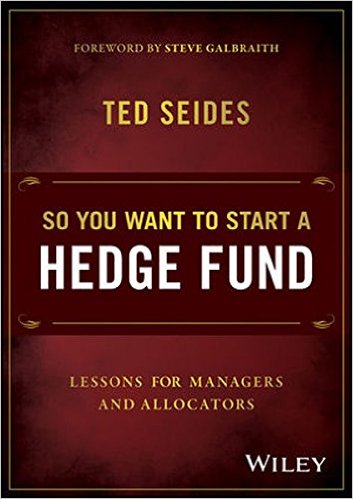
Book Notes – So You Want to Start a Hedge Fund

I know it sounds like a cheesy book name, but like Joel Greenbaltt‘s classic “You Can Be a Stock Market Genius“, this is another great book with cheesy name. The author Ted Seides is one of David Swensen‘s proteges, having worked on both asset owner and money manager sides. Therefore, this book offers unique perspectives (from both capital allocator and money manager angles) on how to build a great money managing business. Lastly, although the book name may be alluding to step by step how-to guidance on starting a hedge, it doesn’t have anything like that. Rather it is fully loaded with real cases, about how start up funds succeeded or failed,  which are invaluable lessons for anyone considering starting their own money managing businesses.

soyouwanttostartahedgefund

I think I probably read this book too early as it could serve these readers with more experiences and are closer to the point of setting up their own funds. Nonetheless, following are the lessons I found most valuable to me. They either significantly changed my existing views or offered brand new insights to me. Continue reading

Indirect Hard Lessons – Gurus’ Recent Mistakes

As an old saying says, “you best teacher is your last mistake.” However what’s challenging for value investors is that it’s very difficult to realize you’ve made a mistake to start with. As you are always going against herds, you’ve already made “mistakes” in others’ eyes, meaning you are left alone to make the judgement. Plus, you have to re-convince yourself about your verdicts when the name keeps going down after your purchases, or if the names move higher you just cannot stop feeling good about yourself, either way it’s really hard to maintain an objective view on your own past decisions.

Market recently has seen some big failures on names backed by some legendary value investors. Although may not be able to learn the lesson as deeply as the investor themselves do, I found these are great case studies nonetheless.

Continue reading